ELECTRICITY TARIFFS
Electricity time periods are characterised by applying a different price depending on the time of day. For time-of-use tariffs, electricity has specific time periods during which consumers will pay more or less for their electricity supply. These periods are divided into off-peak, standard, peak and super off-peak hours.

OFF-PEAK
HOURS
Off-peak hours are those during which energy consumption is generally lower.
These off-peak hours usually occur at night, precisely when households use their appliances less and consume less energy.

STANDARD
HOURS
Standard hours are the period during which more than 50% of electricity consumption takes place, making it the intermediate period in terms of price.
These standard hours usually account for 10–12 hours per day. They represent the intermediate price period, falling between off-peak and peak hours.

PEAK
HOURS
Peak hours are those during which most people have high electricity consumption.
These peak hours usually occur during the daytime, when households are most active in terms of energy use and consumption is higher due to the use of several appliances.

SUPER OFF-PEAK
HOURS
Super off-peak hours are the cheapest hours among the different tariffs offered by energy retailers.
They occur during the night, when it is unusual for appliances to be used, and electricity is therefore cheaper for consumers.
HOME
CONTRACTS WITH
2.0 TD
ACCESS TARIFF

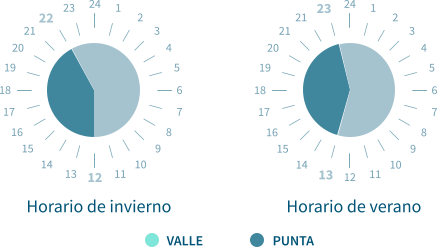
Especially designed for individual consumers with contracted power below 10 kW.


BUSINESSES
CONTRACTS WITH
2.0 TD
ACCESS TARIFF

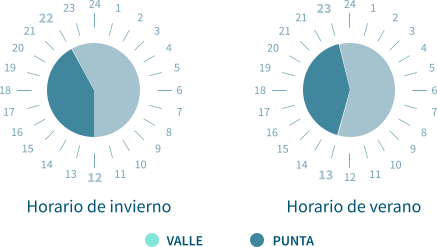
Designed for all consumers with contracted power below 15 kW.
BUSINESSES
CONTRACTS WITH
3.0 TD
ACCESS TARIFF
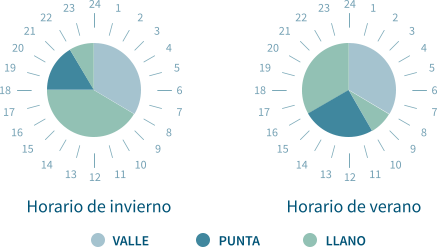
This section refers to all consumers with contracted power above 15 kW on a low-voltage supply, with three time periods.
3.0 TD
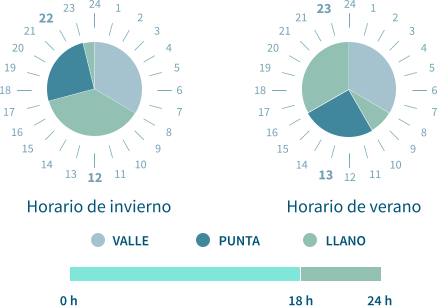
As shown in the table, the OFF-PEAK period covers 8 hours during the night. This corresponds to the cheapest price period. On the other hand, the STANDARD period covers 12 hours per day and is the intermediate price period. Finally, the PEAK period covers 4 hours at a higher price.
Two types of cycles are also distinguished depending on the time of year: winter and summer schedules.
COMPANIES
CONTRACTS WITH
3.0 TD
ACCESS TARIFF
This section refers to all consumers with contracted power below 450 kW connected to a medium-to-high-voltage network, with three time periods.